COVID-19 Impact on the Battery Energy Storage Market by Application (Residential, Nonresidential, and Utilities) and Region - Global Forecast to 2021


[170 Pages Report] The global battery energy storage market size is projected to grow from USD 5.7 billion in 2020 to USD 7.3 billion by 2021, at a CAGR of 13.7% during the forecast period, in the realistic scenario. The growing need for continuous power from critical infrastructure sectors and the rising need to integrate renewable energy sources and rural electrification are factors that are projected to drive the growth of the battery energy storage market during the forecast period.
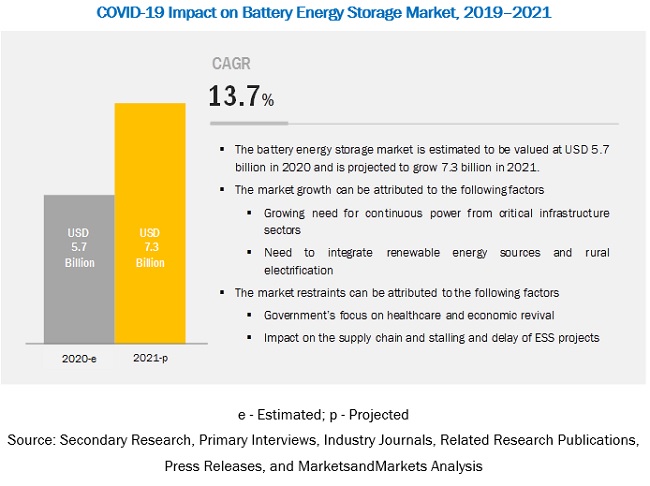
The utilities application segment is projected to grow at a faster rate than the other applications in the battery energy storage market in 2020
The utilities segment is expected to account for the largest share in the battery energy storage industry during the forecast period. According to the US EIA and NREL, utility-owned battery energy storage systems play a crucial role in the operations of current and future energy generation mix of a country. In addition to the system flexibility they provide, battery energy storage systems also offer reliable interconnections in neighboring power systems. The utility-owned segment is mainly driven by increasing financial incentives and regulatory supports from the governments globally.
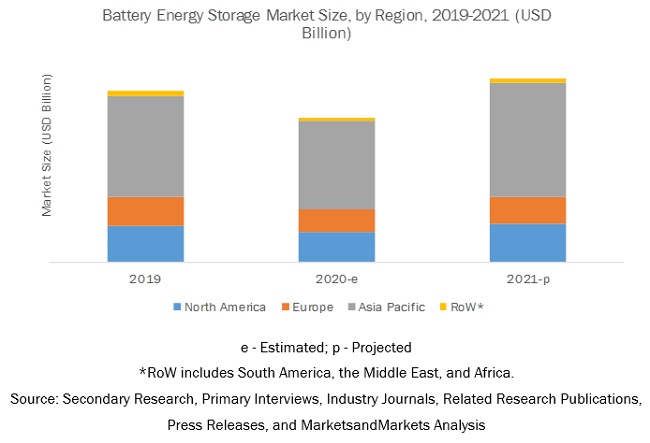
Asia Pacific is projected to account for the largest share in the battery energy storage industry during the forecast period
The Asia Pacific region is projected to be the fastest growing market for battery energy storage during the forecast period. The market in Asia Pacific is expected to witness a sharp decline due to COVID-19 during the forecast period. The region is the largest market for battery energy storage and home to some of the fastest growing economies in the world. Asia Pacific also plans for electrification in remote areas, which are mostly off-grid in several countries. The governments of various countries in this region focus on minimizing the adverse effects of the energy sector on the environment. Some of the major battery energy storage system manufacturers based in Asia Pacific are Samsung SDI, LG Chem, Hitachi, Panasonic, and NEC Corporation.
Key Market Players
Key vendors in the global battery energy storage market include ABB (Switzerland), LG Chem (South Korea), NEC (Japan), Panasonic(Japan), Samsung SDI (South Korea), AEG Power Solutions (Netherlands), General Electric (US), Hitachi (Japan), Siemens (Germany), Tesla (US), and Schneider Electric (France). These players have broad industry coverage and high operational and financial strength.
Scope of the Report
|
Report Metric |
Details |
|
Base year considered |
2019 |
|
Forecast period |
2019–2021 |
|
Forecast units |
Value (USD Million) |
|
Segments covered |
Technology (Qualitative), Application and Region |
|
Geographies covered |
North America, Europe, Asia Pacific, and RoW |
|
Companies covered |
ABB (Switzerland), LG Chem (South Korea), NEC (Japan), Panasonic (Japan), Samsung SDI (South Korea), AEG Power Solutions (Netherlands), General Electric (US), Hitachi (Japan), Siemens (Germany), Tesla (US), and Schneider Electric (France) |
This research report categorizes the battery energy storage market based on application and region.
Based on application:
- Residential
- Nonresidential
- Utilities
Based on region:
- North America
- Europe
- Asia Pacific
- RoW (South America, the Middle East, and Africa)
Key questions addressed by the report:
- Who are the major market players in the battery energy storage market?
- What are the regional growth trends and the largest revenue-generating regions for the battery energy storage industry?
- What are the key regions and industries that are projected to witness significant growth in the battery energy storage market?
- What is the impact of COVID-19 outbreak across various stakeholders in the supply chain of the battery energy storage market during the forecast period?
- What strategies are market players undertaking to sustain in the market?
Frequently Asked Questions (FAQ):
What is the impact of COVID-19 on upcoming utility-owned energy storage systems?
The outbreak of COVID-19 has impacted the utilities energy storage systems due to delays in production, especially in countries such as China and South Korea. This outbreak has affected the significant new projects, which lead to short-term delays until the later part of 2020 until early 2021. In US energy storage projects are expected to be delayed due to covid-19 outbreak in 2020
What is worst affected battery storage market segment?
COVID-19 has impacted the residential sector by affecting the individual economy, which will cause the market to slow down. The market is also impacted by the supply and demand restrictions of the residential battery storage systems in countries such as the US, Germany, China, and Australia. Another key impact is the battery equipment supply constraints due to reduced dollar value and decreased subsidies for residential sector energy storage projects.
What is impact on COVID-19 on Li-ion battery market?
COVID-19 has impacted the supply of lithium batteries and raw materials from the country from the start of January 2020. The global lithium production industry is expected to witness a further decline and more disruption in the supply chain if COVID-19 impact deepens in other key countries such as South Korea and Japan.
Which region is expected to dominate the energy storage market in short term?
Asia Pacific region is expected to dominate the market in all three segments namely, the residential, non-residential and utility. Increased renewable energy additions coupled with energy storage will primarily drive the market. China, India and Japan are expected to be the key drivers of the region.
What are the key energy storage companies that have been affected by COVID-19?
ABB, Panasonic, GE, Tesla, LG Chem, Siemens, and BYD are some of the major battery manufacturers in the world. The increasing number of COVID-19 cases have forced these companies to either shut down their complete operations or run their operations with 60% less production capacity. The companies are also diversifying their other business segments to maintain the overall profit. .
To speak to our analyst for a discussion on the above findings, click Speak to Analyst
 Exclusive indicates content/data unique to MarketsandMarkets and not available with any competitors.
Table Of Content
1 INTRODUCTION
1.1 COVID-19
1.2 CONFIRMED CASES AND DEATHS BY GEOGRAPHY
2 COVID-19 IMPACT BATTERY ENERGY STORAGE ECOSYSTEM
2.1 VALUE CHAIN OF BATTERY ENERGY STORAGE INDUSTRY
2.2 IMPACT ON VALUE CHAIN
2.2.1 RAW MATERIALS/SUPPLIERS
2.2.2 BATTERY MANUFACTURER
2.2.3 POWER CONVERSION SUPPLIER
2.2.4 SOFTWARE SUPPLIER
2.2.5 ENERGY STORAGE SYSTEM SUPPLIER
2.2.6 ENERGY STORAGE INTEGRATOR
2.2.7 ENERGY STORAGE OPERATOR
2.3 MACROECONOMIC INDICATORS
2.3.2 DRIVERS
2.3.2.1 GROWING NEED FOR CRITICAL INFRASTRUCTURE POWER REQUIREMENT
2.3.2.2 NEED TO INTEGRATE INCREASING RENEWABLE ENERGY SOURCES AND RURAL ELECTRIFICATION
2.3.2 RESTRAINTS
2.3.2.1 GOVERNMENT FOCUS ON HEALTHCARE AND ECONOMIC REVIVAL
2.3.2.2 INTEGRATION AND DEPLOYMENT CHALLENGES
3 GROWTH OPPORTUNITES IN BATTERY ENERGY STORAGE MARKET
3.1 MOST ATTRACTIVE MARKET- IMPACT & OPPORTUNITES
3.1.1 UTILITY OWNED
3.2 WORST-AFFECTED MARKET- IMPACT & OPPORTUNITES
3.2.1 CUSTOMER OWNED
4 COMPETITIVE LANDSCAPE AND COVID-19 IMPACT
4.1 IMPACT ON BATTERY ENERGY STORAGE COMPANIES PORTFOLIO
4.1.1 PRODUCT
4.1.2 APPLICATION
4.1.3 REGION
4.2 WINNING STRATEGIES TO GAIN MARKET SHARE
4.2.1 SHORT TERM STRATEGIES
4.2.2 MID TERM STRATEGIES
4.2.3 LONG TERM STRATEGIES
5 CUSTOMER ANALYSIS
5.1 SHIFT IN LITHIUM-ION BATTERIES
5.1.1 DISRUTPTION IN THE INDUSTRY
5.1.2 IMPACT IN CUSTOMERS’ OUTPUT & STRATEGIES TO RESUME/IMPROVE PRODUCTION
5.1.3 NEW MARKET OPPORTUNITIES/GROWTH OPPORTUNITES
5.2 SHIFT IN LEAD ACID BATTERIES
5.2.1 DISRUTPTION IN THE INDUSTRY
5.2.2 IMPACT IN CUSTOMERS’ OUTPUT & STRATEGIES TO RESUME/IMPROVE PRODUCTION
5.2.3 NEW MARKET OPPORTUNITIES/GROWTH OPPORTUNITES
6 IMPACT OF COVID-19 IN BATTERY ENERGY STORAGE MARKET
6.1 BATTERY ENERGY STORAGE BY CONNECTION TYPE
6.1.1 ON-GRID CONNECTION
6.1.2 OFF-GRID CONNECTION
6.2 BATTERY ENERGY STORAGE BY OWNERSHIP
6.2.1 CUSTOMER OWNED
6.2.2 THIRD-PARTY OWNED
6.2.3 UTILITY OWNED
6.3 BATTERY ENERGY STORAGE BY APPLICATION
6.3.1 RESIDENTIAL
6.3.2 NON-RESIDENTIAL
6.3.3 UTILITIES
6.3.4 OTHERS
6.4 REGION
6.4.1 NORTH AMERICA
6.4.1.1 US
6.4.1.2 CANADA
6.4.1.3 MEXICO
6.4.2 EUROPE
6.4.2.1 GERMANY
6.4.2.2 UK
6.4.2.3 FRANCE
6.4.2.4 REST OF EUROPE
6.4.3 ASIA PACIFIC
6.4.3.1 CHINA
6.4.3.2 INDIA
6.4.3.3 JAPAN
6.4.3.4 SOUTH KOREA
6.4.3.5 REST OF ASIA PACIFIC
6.5.4 REST OF WORLD
6.5.4.1 SOUTH AMERICA
6.5.4.2 MIDDLE EAST
6.5.4.3 AFRICA
6.5.4.4 REST OF MIDDLE EAST & AFRICA
The study involved four major steps in estimating the size of the battery energy storage market. Exhaustive secondary research was done to collect information on the market, as well as the parent market. The next step was to validate these findings, assumptions, and sizing with industry experts across the value chain through primary research. Both the top-down and bottom-up approaches were employed to estimate the complete market size. After that, market breakdown and data triangulation were used to estimate the market size of segments and subsegments.
Secondary Research
In the secondary research process, various sources were referred to, to identify and collect information for this study. These secondary sources included reports from the World Health Organisation (WHO), International Energy Agency (IEA), International Renewable Energy Agency (IRENA), and US Energy Storage Association. The secondary sources also included annual reports, press releases, investor presentations of companies, white papers, certified publications, articles by recognized authors and regulatory bodies, trade directories, and databases.
Secondary research was mainly conducted to obtain key information about the industry’s supply chain, COVID-19 impact across the stakeholders of the supply chain, total pool of key players, market classification & segmentation according to the industry trends to the bottom-most level, and geographical markets. It was also used to obtain information about the key developments from a market-oriented perspective.
Primary Research
The battery energy storage market comprises several stakeholders in the supply chain, which include global and regional battery energy storage manufacturers, suppliers, power conversion suppliers, software suppliers, energy storage integrators, energy storage operators, and energy storage system suppliers. Primary sources from both the supply and demand sides of the market were interviewed to obtain qualitative and quantitative information. The primary interviewees from the demand side include key opinion leaders, regional battery energy storage dealers, and manufacturers. The primary sources from the supply side include raw material suppliers, manufacturers of battery energy storage industry, research institutions involved in R&D, and key opinion leaders in the battery energy storage market.
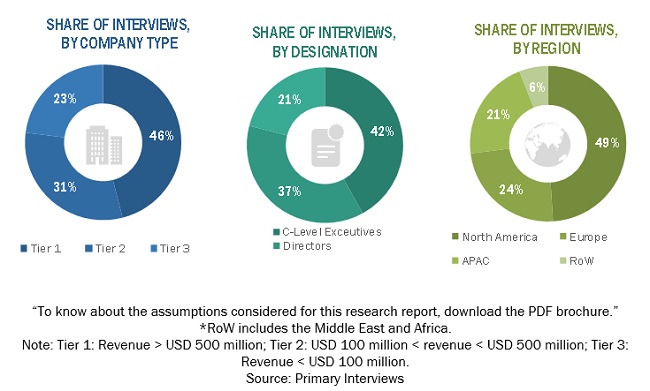
To know about the assumptions considered for the study, download the pdf brochure
Market Size Estimation
Both the top-down and bottom-up approaches were used to estimate and validate the total size of the battery energy storage market due to the COVID-19 impact. These approaches were also used extensively to estimate the size of various subsegments in the market. The research methodology used to estimate the market size includes the following details:
- The key players were identified through extensive secondary research.
- The COVID-19 impact on market size of battery energy storage, in terms of value and volume, was determined through primary and secondary research.
- All percentage share splits and breakdowns were determined using secondary sources and verified through primary sources.
- All the possible parameters that affect the market covered in this research study were accounted for, viewed in extensive detail, verified through primary research, and analyzed to obtain the final quantitative and qualitative data.
Data Triangulation
After arriving at the overall market size from the estimation process explained above, the total market was split into several segments and subsegments. The data triangulation and market breakdown procedures were employed to estimate the global battery energy storage market due to COVID-19 impact and arrive at the exact statistics for all segments and subsegments, wherever applicable. The data was triangulated by studying various factors and trends from the demand and supply sides. Along with this, the market size was validated using both the top-down and bottom-up approaches.
Report Objectives
- Determining and projecting the size of the battery energy storage market, with respect to application and regional markets, over a period, ranging from 2019 to 2021.
- Identifying the attractive opportunities in the market by determining the largest and fastest growing segments across regions
- Providing detailed information about the impact of COVID-19 on battery energy storage supply chain and its impact on various stakeholders such as raw material suppliers, battery manufacturers, power conversion suppliers, software suppliers, energy storage system suppliers, energy storage integrators, and energy storage operators.
- Providing detailed information about the key factors influencing the growth of the battery energy storage market (drivers, restraints, opportunities, and industry-specific challenges)
- Analyzing the micromarkets, with respect to individual growth trends, prospects, and their contribution to the total market
- Identifying and profiling the key players in the battery energy storage market and the impact of COVID-19 on the key vendors.
- Providing a comparative analysis of market leaders based on the following:
- Product offerings
- Business strategies
- Strengths and weaknesses
- Understanding the competitive landscape and identifying the major growth strategies adopted by players across the key regions due to COVID-19.
- Analyzing the value chain and products offered across key regions and their impact on the growth of the prominent battery energy storage market players.
Available Customizations
Geographical Analysis
- Further breakdown of the Rest of Europe battery energy storage, by key country
- Further breakdown of the Rest of Asia Pacific battery energy storage market, by key country
Company Information
- Analyses and profiling of additional market players (up to five)











Growth opportunities and latent adjacency in COVID-19 Impact on the Battery Energy Storage Market