Motorcycle ADAS Market by ADAS (ABS, ACC & others), Power Range (<300cc, 300-600cc, 600-1000cc & 1000cc>), Engine Configuration (Single & Multi-cylinder Engine), Component (RADAR, Sensors & Camera), Propulsion Type & Region -Global Forecast to 2025


Over the past few decades, there has been upsurge in road accidents. Rider error is majorly responsible for the accidents. However, there has been increase in initiatives taken by governments and motorcycle manufacturers to reduce road fatality. Driver errors can be minimized by providing driving assistance. Hence, in some countries government has already mandated integration of ADAS functions in motorcycles. Sensor technology is likely to play a crucial role in automated driving, which can efficiently scan the surrounding environment better than human senses, have a better distant vision ahead, detect small obstacles, and manage traffic better. Increasing use of motorcycle ADAS and continuous government initiative is anticipated to improve road safety.
The report highlights the global motorcycle ADAS market, in terms of volume and value. The market volume is expressed in terms of thousand units, whereas the value of the market is expressed in terms of USD million from 2017–2025.
The report features major players in the production of ADAS systems for motorcycles and provides insights about their business strategies. The report also lists the number of ADAS systems being used and the roadmap of their growth in the next five years. It also features drivers, restraints, opportunities, and challenges of the global Motorcycle ADAS market.
Future of Motorcycle ADAS
The integration of ADAS features in a motorcycle has been resulted in improvement of road safety for riders. Moreover, increasing government mandates pertaining to road safety shall propel motorcycle ADAS market. The demand for comfort features in motorcycle is also, which will further boost motorcycle ADAS market.
 Exclusive indicates content/data unique to MarketsandMarkets and not available with any competitors.
Table of Contents
1 Introduction
1.1 Objectives of the Study
1.2 Market Definition
1.3 Market Scope
1.3.1 Markets Covered
1.3.2 Years Considered in the Report
1.4 Currency and Pricing
1.5 Package Size
1.6 Limitations
1.7 Stakeholders
1.8 Assumptions
2 Research Methodology
2.1 Secondary Data
2.1.1 Key Secondary Sources
2.1.2 Key Data From Secondary Sources
2.2 Primary Data
2.2.1 Sampling Techniques & Data Collection Methods
2.2.2 Primary Participants
2.3 Factor Analysis
2.3.1 Introduction
2.3.2 Demand Side Analysis
2.3.3 Supply Side Analysis
2.4 Market Size Estimation
2.5 Data Triagulation
2.6 Assumptions
3 Executive Summary
4 Premium Insights
5 Market Overview
5.1 Introduction
5.2 Market Segmentation
5.3 Market Dynamics
5.3.1 Drivers
5.3.2 Restraints
5.3.3 Opportunities
5.3.4 Challenges
7 Motorcycle ADAS Market, By ADAS System Type
7.1 Introduction
7.2 Antilock Braking System (ABS)
7.3 Adaptive Cruise Control (ACC)
7.4 Traction Control System (TCS)
7.5 Traffic Sign Assist
7.6 Intelligent Headlight Assist
7.8 Motorcycle Stability Control (MSC)
7.9 Side View Assist
7.10 Forward Collision Warning
7.11 Blind Spot Detection
7.12 Emergency Brake Assist (EBA)
7.13 Tire Pressure Monitoring System (TPMS)
8 Motorcycle ADAS Market, By Power Range
8.1 Introduction
8.2 < 300 Cc
8.3 300-600 Cc
8.4 600-1000 Cc
8.5 1000 Cc >
8 Motorcycle ADAS Market, By Engine Configuration
8.1 Introduction
8.2 Single Cylinder Engine
8.3 Multi Cylinder Engine
9 Motorcycle ADAS Market, By Propulsion Type
9.1 Introduction
9.2 Diesel
9.3 Petrol
9.4 Electric
10 Motorcycle ADAS Market, By Component
10.1 Introduction
10.2 Radar
10.3 Wheel Speed Sensor
10.4 Camera
11 Motorcycle ADAS Market, By Region
11.1 Introduction
11.2 Asia-Pacific
11.2.1 China
11.2.2 Japan
11.2.3 India
11.2.4 South Korea
11.3 Europe
11.3.1 Germany
11.3.2 France
11.3.3 UK
11.3.3 Spain
11.3.4 Italy
11.4 North America
11.4.1 U.S.
11.4.2 Canada
11.4.3 Mexico
11.5 Rest of the World
11.5.1 Russia
11.5.2 Brazil
14 Competitive Landscape
14.1 Overview
14.2 Competitive Situations and Trends
14.3 Competitive Benchmarking and Landscape
14.3.1 New Product Launches
14.3.2 Expansions
14.3.3 Joint Ventures
14.3.4 Acquisitions
14.3.5 Agreements
14.3.6 Others
15 Company Profiles
15.1 Robert Bosch GmbH
15.2 Continental AG
15.3 BMW Motorrad
15.4 ZF Friedrichshafen
15.5 Garmin Ltd.
15.6 NXP Semicounductors
15.7 Motorcycle Cruise Controls
15.8 Ducati
15.9 Texas Insruments
15.10 Cisco System
16 Appendix
16.1 Discussion Guide
16.2 Introducing RT: Real Time Market Intelligence
16.3 Available Customizations
16.4 Related Reports
16.5 Other Developments












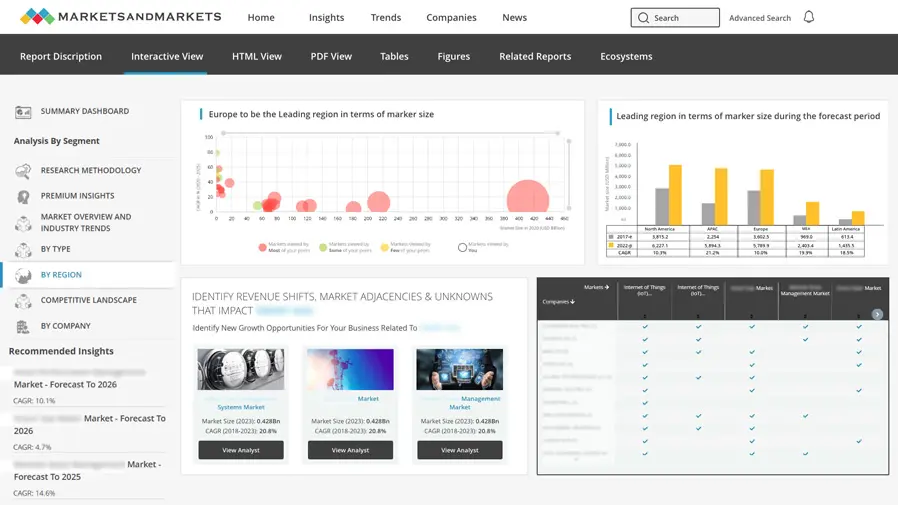
Growth opportunities and latent adjacency in Motorcycle ADAS Market