Railway Battery Market - Global Forecast to 2025


This study covers railway battery market by type, by propulsion, by technology, by application and by region. The gradual decreasing in the imports of fuel since the recent past is majorly responsible for the intensification of numerous railway electrification projects in several countries. Railway batteries are looked as the best substitute for the diesel engines for propulsion by the key players of rail industry. The high maintenance cost of diesel engines and its adverse impact on environment due to emission is further driving the growth of railway battery market globally. Moreover, the growing demand for energy efficient transportation is encouraging the use of battery which subsequently pushing the growth of railway battery market worldwide. However, high cost of battery for the power source may offer challenges to the growth of global railway battery market. Asia-pacific region is estimated to be the largest market for railway battery market due to the presence of large railway networks of numerous countries such as India, China, Japan, and Indonesia among others.
Years considered for this report:
- 2016 - Base Year
- 2017 - Estimated Year
- 2019, 2022, 2025 - Forecast Period
Objectives of the Study:
- To segment and forecast the railway battery market size, by value and volume, based on type, from 2017 to 2025.
- To segment and forecast the railway battery market size, by value and volume, based on propulsion, from 2017 to 2025.
- To segment and forecast the railway battery market size, by value and volume, based on technology, from 2017 to 2025.
- To segment and forecast the railway battery market size, by value and volume, based on application, from 2017 to 2025.
- To segment and forecast the electric vehicle range extender systems market size, by volume, based on region, from 2017 to 2025.
The research methodology used in the report involves various secondary sources including paid databases and directories. Experts from related industries and suppliers have been interviewed to understand the future trends of the railway battery. The bottom-up approach has been used to estimate the market size, by volume. The market size, by volume, is multiplied by the average OE price (AOP) of railway battery required for each application and the battery type to calculate the market size in terms of value. The summation of the country-wise market gives the regional market, and further summation of the regional market provides the global railway battery.
The ecosystem of the railway battery market consists of manufacturers and Tier 1 suppliers such as Johnsons Controls (US), Exide Technologies (US), GS Yuasa (Japan), Robert Bosch (Germany), Saft Groupe (France), Delphi (UK), LG Chem (South Korea), Panasonic (Japan), Tesla (US), Toshiba (Japan).
Target Audience
- Railway manufacturers
- Developers of battery systems
- Power Supply dealers
- Industry associations
- Raw material suppliers
- Railways organizations/associations
- Infrastructure providers for railway lines
“The study answers several questions for the stakeholders, primarily which market segments to focus in the next two to five years (depends on a range of forecast period) for prioritizing their efforts and investments”
Scope of the Report
- Railway Battery, By Type
- Lead Acid
- Nickel Metal Hydride
- Lithium-Ion
- Railway Battery, By Propulsion
- Diesel Locomotive
- Electric Locomotive
- Maglev
- Solar Powered
- Railway Battery, By Technology
- Diesel Multiple Unit
- Electric Multiple Unit
- Light Rail/Tram
- Metro
- Railway Battery, By Application
- Passenger
- Freight
- Electric vehicle range extender market, By Region
- Asia Pacific
- Europe
- North America
- ROW
 Exclusive indicates content/data unique to MarketsandMarkets and not available with any competitors.
Table of Contents
1 Introduction
1.1 Objectives of the Study
1.2 Market Definition
1.3 Market Scope
1.3.1 Years Considered for the Study
1.4 Currency
1.5 Package Size
1.6 Limitations
1.7 Stakeholders
2 Research Methodology
2.1 Research Data
2.2 Secondary Data
2.2.1 Key Secondary Sources
2.3 Primary Data
2.3.1 Sampling Techniques & Data Collection Methods
2.3.2 Primary Participants
2.4 Factor Analysis
2.4.1 Introduction
2.4.2 Demand-Side Analysis
2.4.3 Supply-Side Analysis
2.5 Market Size Estimation
2.6 Data Triangulation
2.7 Assumptions
3 Executive Summary
4 Premium Insights
4.1 Railway Battery Market, 2017 vs 2025
4.2 Railway Battery Market, By Type
4.3 Railway Battery Market, By Propulsion
4.4 Railway Battery Market, By Technology
4.5 Railway Battery Market, By Application
4.6 Railway Battery Market, By Region
5 Market Overview
5.1 Introduction
5.2 Market Dynamics
5.2.1 Drivers
5.2.2 Restraints
5.2.3 Opportunities
5.2.4 Challenges
5.3 Macro-Indicator Analysis
6 Technology Overview
7 Railway Battery Market, By Type
7.1 Introduction
7.2 Lead Acid
7.3 Nickel Metal Hydride
7.4 Lithium-Ion
8 Railway Battery Market, By Propulsion
8.1 Introduction
8.2 Diesel Locomotive
8.3 Electric Locomotive
8.4 Maglev
8.5 Solar Powered
9 Railway Battery Market, By Technology
9.1 Introduction
9.2 Diesel Multiple Unit
9.3 Electric Multiple Unit
9.4 Light Rail/Tram
9.5 Metro
10 Railway Battery Market, By Application
10.1 Introduction
10.2 Passenger
10.3 Freight
11 Railway Battery Market, By Region
11.1 Introduction
11.2 Asia Pacific
11.2.1 China
11.2.2 Japan
11.2.3 India
11.2.4 South Korea
11.3 Europe
11.3.1 Germany
11.3.2 France
11.3.3 UK
11.3.4 Italy
11.4 North America
11.4.1 US
11.4.2 Canada
11.4.3 Mexico
11.5 RoW
11.5.1 Brazil
11.5.2 Russia
12 Competitive Landscape
12.1 Market Ranking Analysis: Railway Battery
12.2 Expansions
12.3 New Product Launches/ Development
12.4 Joint Ventures & Acquisition
12.5 Supply Contract
13 Company Profiles
13.1 Robert Bosch GmbH
13.1.1 Business Overview
13.1.2 Recent Developments
13.2 Toshiba Corporation
13.2.1 Business Overview
13.2.1 Recent Developments
13.3 Johnson Controls
13.3.1 Business Overview
13.3.2 Recent Developments
13.4 Delphi Automotive
13.4.1 Business Overview
13.4.2 Recent Developments
13.5 Panasonic Corporation
13.5.1 Business Overview
13.5.2 Recent Developments
13.6 LG Chem
13.6.1 Business Overview
13.6.2 Recent Developments
13.7 Samsung Sdi Company
13.7.1 Business Overview
13.7.2 Recent Developments
13.8 Exide Technologies
13.8.1 Business Overview
13.8.2 Recent Developments
13.9 GS Yuasa Corporation
13.9.1 Business Overview
13.9.2 Recent Developments
13.10 Safte Groupe
13.10.1 Business Overview
13.10.2 Recent Developments
13.11 Trojan Battery Company
13.11.1 Business Overview
13.11.2 Recent Developments
13.12 A123 Systems
13.12.1 Business Overview
13.12.2 Recent Developments
14 Appendix
14.1 Key Insights of Industry Experts
14.2 Discussion Guide
14.3 Knowledge Store: Marketsandmarkets’ Subscription Portal
14.4 Introducing RT: Real Time Market Intelligence
14.5 Available Customization
14.6 Related Reports
14.7 Author Details











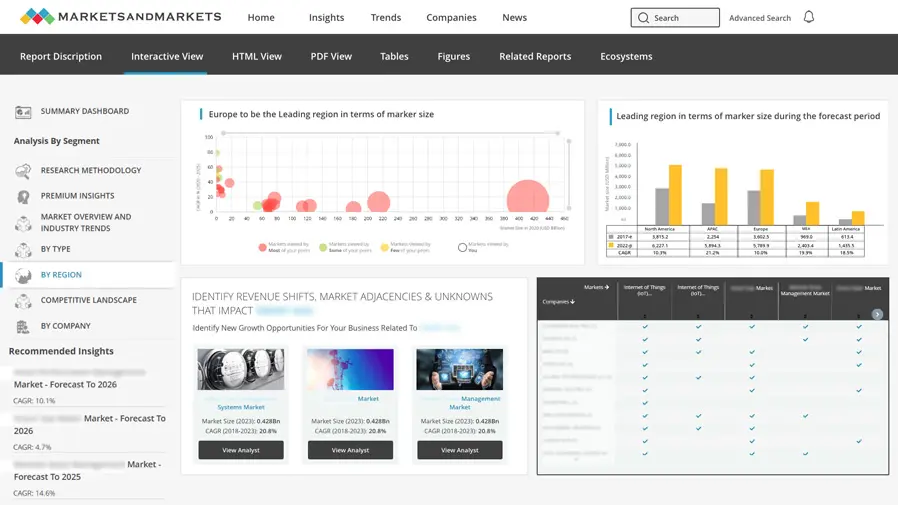
Growth opportunities and latent adjacency in Railway Battery Market