Thailand Veterinary Vaccines Market - Global Trends and Forecast to 2020


In this report, the Thailand Veterinary Vaccines market is divided into product, technology and disease segment. The animal vaccines market in Thailand has witnessed significant developments over the past few years and will continue to grow in the future. Similar to other countries across the globe, in Thailand, animal vaccination is carried out for preventing diseases in animals, improving animal health, increasing the production of meat, and preventing the rising incidences of zoonotic diseases.
Since Thailand is an emerging market for veterinary vaccines, a number of global players are undertaking strategic developments to leverage the growth opportunities and increase their presence in the market in Thailand. This, coupled with the increasing incidence of zoonotic diseases, is driving the veterinary vaccines market.
In the last few decades, Thailand has witnessed the outbreaks of porcine diseases, such as Porcine Epidemic Diarrhea (PED), Porcine Reproductive and Respiratory Syndrome (PRRS), and foot and mouth disease, and poultry diseases such as Newcastle disease (ND) and avian influenza. Such outbreaks result in major losses for the porcine and poultry industries. Owing to this, there is an increasing need for preventing animal disease outbreaks in Thailand, which in turn is expected to result in the greater uptake of veterinary vaccines in the country.
In 2014, the porcine vaccines segment accounted for the largest and fastest share of the Thailand veterinary vaccines market. Increasing incidences of swine flu and emerging diseases such as Porcine Epidemic Diarrhea (PED), Porcine Reproductive and Respiratory Syndrome (PRRS), and foot and mouth disease are driving the growth of the segment. Besides this, increasing awareness about animal vaccination, advancements in technology, and increasing investments by leading players are expected to augment the growth of the porcine vaccines market in Thailand.
Major animal vaccine production technologies include live attenuated vaccines, inactivated vaccines, subunit vaccines, toxoid vaccines, conjugate vaccines, and recombinant vaccines .Among technology, the inactivated vaccines segment held the largest market share in the porcine and companion animal vaccine technologies market in Thailand. The growth in this segment can be attributed to increasing prevalence of diseases among porcine and companion animals (dogs and cats), and these vaccines are most effective and stable compared to other types of vaccines.
The Thailand veterinary vaccines market is segmented into porcine diseases, poultry diseases, companion animal diseases, and livestock diseases. Vaccination plays a crucial role in the prevention of diseases in animals. Moreover, vaccines can be used for increasing animal productivity, improving animal welfare, and curbing the spread of zoonotic diseases.
Some of the major players in the Thailand veterinary vaccines market are Zoetis, Inc. (U.S.), Merial (a Sanofi Company, France), Merck Animal Health (U.S.), Novartis Animal Health (Switzerland), and Boehringer Ingelheim Vetmedica, Inc. (U.S.)
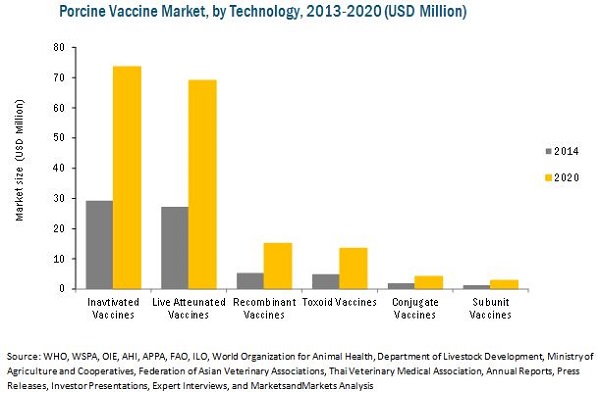
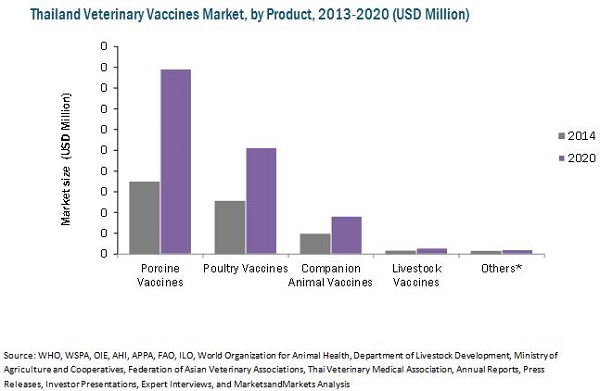
In 2014, the porcine vaccines segment accounted for the largest share of the Thailand veterinary vaccines market.
 Exclusive indicates content/data unique to MarketsandMarkets and not available with any competitors.













Growth opportunities and latent adjacency in Thailand Veterinary Vaccines Market